 SnapFood
Every photo calorie counter — SnapFood included — will sometimes be wrong. Anyone who tells you otherwise is marketing to you. The better questions are: where does photo AI drift, how much does that matter for your goal, and what can you do about it? Let's take them in order.
What the AI actually has to figure out
A calorie estimate from a photo is really three estimates multiplied together:
- Identification — what is this? Modern models are strong here. Grilled chicken, edamame, avocado, brown rice: recognizable foods get recognized reliably.
- Portioning — how much of it? This is the hardest part. A photo is 2D; food has depth. Plate size and visual context help, but a deep bowl of rice can hide a lot.
- Composition — what's in it that I can't see? Oil in the pan, butter in the mash, sugar in the sauce. No camera can see these — which is exactly why correction tools matter.
Multiply a good identification by a decent portion estimate and an assumption about preparation, and you get a useful number with an error bar — not a lab measurement. Nutrition labels themselves are allowed meaningful rounding and variance, and restaurant portions vary plate to plate. Perfect precision was never on the menu; a dependable estimate is.
Where photo estimates are strong — and where they drift
Strong: plated meals with distinct, visible components. A protein + carb + vegetable plate, a poke bowl, eggs and toast, a salad where you can see the ingredients. Identification is easy and portions are mostly on the surface.
Watch closely:
- Cooking fat. A tablespoon of oil is ~120 kcal and completely invisible once absorbed.
- Sauces and dressings. Creamy or sugary sauces swing a meal by hundreds of calories.
- Dense, deep or mixed dishes. Casseroles, curries, layered pasta — depth hides volume.
- Hidden fillings. The inside of a burrito is a rumor until you describe it.
The part most accuracy debates miss: consistency beats precision
Suppose your tracker runs 10% low on everything. Your weekly total is still directionally right, your calorie deficit still shows up in the weight trend, and you can adjust your target from real-world results. A consistent estimator is genuinely useful even when imperfect.
Now suppose your logging is precise but so tedious you quit after twelve days. Accuracy of abandoned tracking: zero. This is the real trade-off, and it's why photo-first logging wins for most people — it keeps the streak alive. SnapFood leans into this with streaks that reward showing up, not perfection.
How SnapFood deals with its own error bar
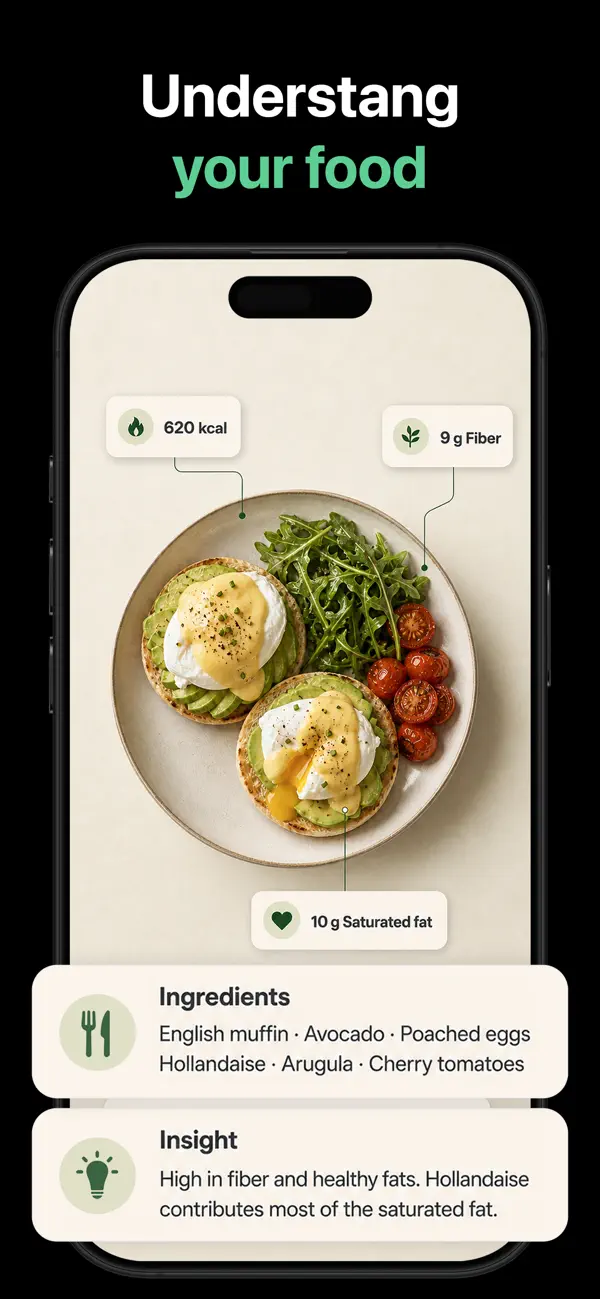
- It shows its work. Every scan lists the ingredients it saw and the portion it assumed — so errors are visible instead of buried in a single number.
- You fix it with a sentence. “The rice was brown.” “It was cooked in butter.” “Add a fried egg.” Nutrition, ingredients and the grade update instantly.
- Portions are editable. Switch between servings and grams and dial the amount — ate half, log half.
- The grade absorbs noise. An S–D grade with a one-line reason is robust to small calorie wobble: a well-balanced plate is well-balanced at 580 or 640 kcal. See how the grades work.
Five ways to tighten your own accuracy
- Photograph the plate before you start eating, from slightly above, in decent light.
- Keep every component in frame — sides, drinks, sauces.
- Tell the app what it can't see: cooking oil, sugar in coffee, mayo in the sandwich.
- For packaged food with a label, trust the label — photo AI is for food without one.
- Judge your week by the trend (weight, day grades), not any single meal's number.
See what it says about your plate
SnapFood is free on the App Store and Google Play — scan a meal, check the ingredient list, and correct it in one sentence if it missed something.
Frequently asked questions
Are AI calorie counters accurate enough for weight loss?
Which foods are hardest for photo AI?
Is manual database logging more accurate?
Nutrition values, grades and recommendations in SnapFood are AI-generated estimates and may be inaccurate. This guide is general information, not medical or dietary advice. Consult a qualified healthcare professional before making health or diet decisions.