 SnapFood
Every diet that works — keto, fasting, "clean eating", the soup thing your coworker swears by — works because it gets you to eat less than you burn. The branding differs; the mechanism doesn't. Understanding that frees you to pick the version you can actually live with.
The mechanism in one paragraph
Your body burns energy around the clock — organs, movement, digestion, training. Eat less than that total and the shortfall comes out of storage, mostly body fat. A rough (imperfect, but useful) rule: about 7,700 kcal of deficit adds up to roughly 1 kg of fat. A 500 kcal daily deficit ≈ 3,500 kcal a week ≈ just under half a kilo. The math is boring on any single day and unstoppable across months — in both directions.
Picking the right size deficit
- Moderate (300–500 kcal/day): the default. Visible progress with enough food to keep protein high, workouts fueled and dinner social.
- Aggressive (600–1,000 kcal/day): short runs only. Faster on paper; in practice hunger, fatigue and rebound eating erase the spreadsheet advantage for most people.
- Too deep: a trap. Very low intakes (under ~1,200 kcal/day) risk nutrient shortfalls and shouldn't be attempted without medical guidance.
Not sure what you burn in the first place? Start with how many calories should you eat a day — your deficit target is that number minus 300–500.
Why deficits fail (it's rarely the math)
- Invisible calories. Cooking oil, dressings, "just a bite" — 300 unlogged kcal quietly erases the whole plan.
- Weekend amnesia. Five disciplined days can't outrun two untracked ones.
- All-or-nothing psychology. One rough meal becomes a rough week because the streak "is already broken".
- Scale panic. Water weight swings mask fat loss for days; people quit exactly when it's working.
Notice the pattern: failures are about visibility and consistency, not willpower. That's a tooling problem — which is fixable.
Holding the deficit with SnapFood
- Set the goal. Choose “lose” in onboarding; SnapFood builds a daily calorie and macro budget around your body, activity and pace.
- Photograph everything you eat. Ten seconds per meal keeps the invisible calories visible — including the ones you'd rather not type into a search box. That's photo calorie counting doing its job.
- Fix the hidden stuff with a sentence. “Cooked in butter.” “There was a second helping of rice.” Honest logs, minimal ceremony.
- Watch the day grade, not just the number. High-protein, high-fiber plates earn better grades and keep you full for fewer calories — the grade nudges you toward a deficit that doesn't feel like one.
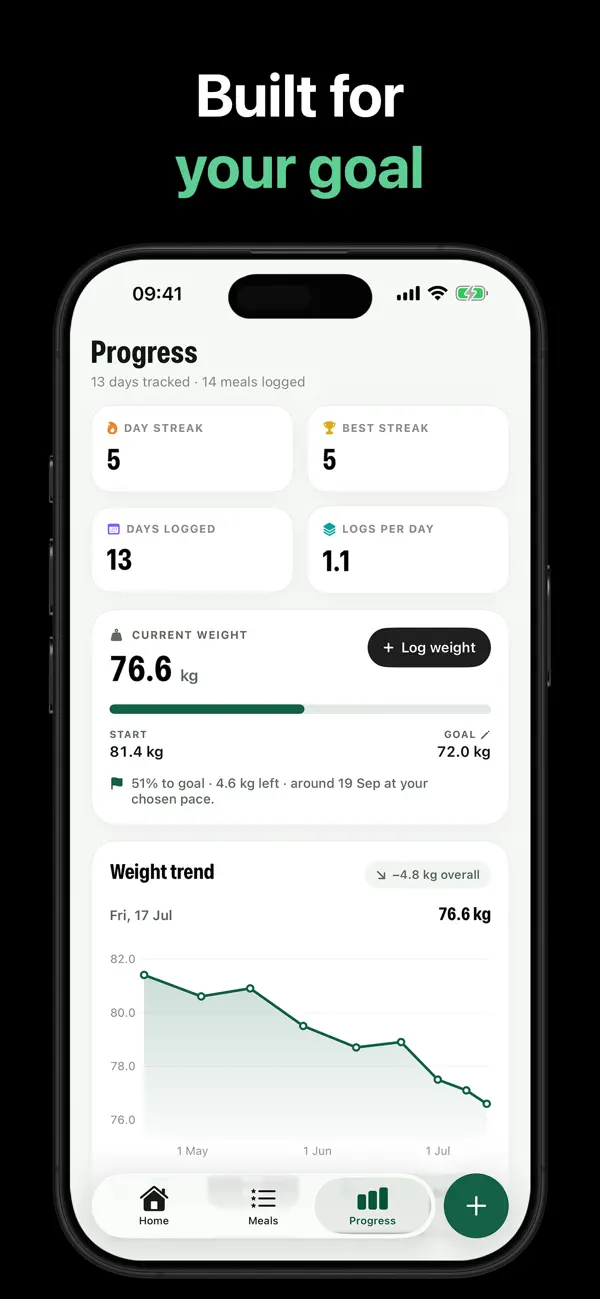
- Judge the week by the trend. Log your weight in Progress; the trend line and goal forecast (“around 19 Sep at your chosen pace”) tell you if the deficit is real — regardless of what today's scale said.
- Keep the streak, forgive the meal. Streaks in SnapFood reward showing up, not perfection. Log the rough meal, take the C, keep going.
Make your deficit visible
SnapFood sets your target, grades every plate against it, and shows the weight trend that proves it's working. Free on the App Store and Google Play.
Frequently asked questions
How big should my calorie deficit be?
Why is my weight up if I'm in a deficit?
Do I have to cut out specific foods?
Nutrition values, grades and recommendations in SnapFood are AI-generated estimates and may be inaccurate. This guide is general information, not medical or dietary advice. Consult a qualified healthcare professional before starting any weight-loss plan.